






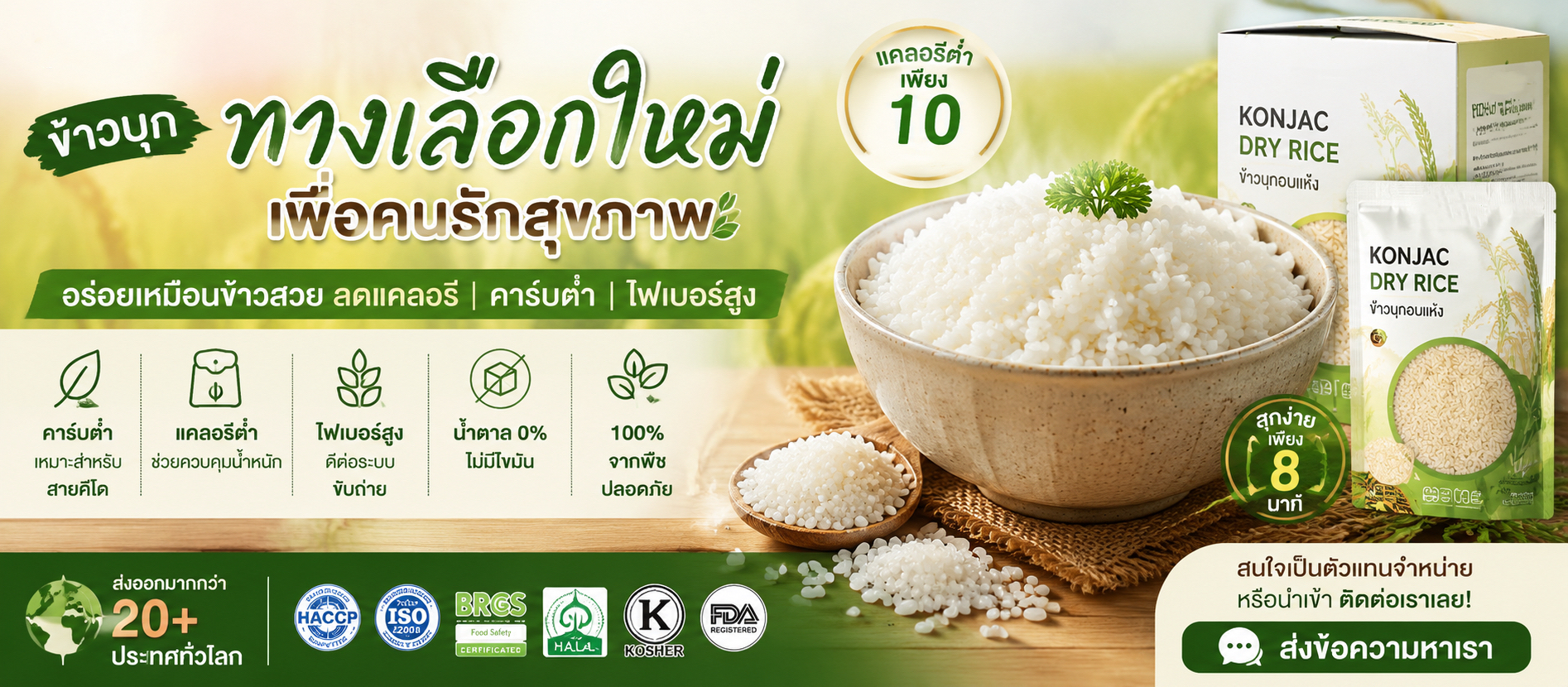


Low-Calorie Rice Substitutes: Selection Criteria for Brand & Product Development
Introduction
Introduction
Rice remains a core staple in many markets, but changing consumer preferences are creating new opportunities for low-calorie rice substitutes. Consumers are increasingly looking for lighter meal options that fit low-carb, calorie-conscious, high-fiber, and wellness-oriented lifestyles.
For brands, however, choosing a rice substitute is not simply about finding the lowest calorie number. Texture, formulation, cooking performance, shelf life, packaging, cost, and consumer positioning all influence whether a product can succeed commercially.
This guide explains the key selection criteria brands should consider when developing or sourcing a low-calorie rice product.
1. Start with the Target Consumer
Before selecting a product, define who you are developing it for.
Different consumer groups may have very different expectations:
Weight-management consumers may prioritize calorie reduction and portion control.
Low-carb consumers may focus more on digestible carbohydrate content.
Keto-focused brands may require a specific nutritional profile.
Health-conscious shoppers may prefer high-fiber or clean-label formulations.
Busy consumers may value fast preparation and convenient packaging.
Retail buyers may prioritize shelf stability, attractive packaging, and consistent supply.
A clear target audience makes it easier to determine which product specifications actually matter.
2. Compare the Nutritional Profile
2. Compare the Nutritional Profile
Calories are important, but they should not be the only selection criterion.
When comparing low-calorie rice substitutes, brands should review:
Calories per serving
Total carbohydrates
Dietary fiber
Protein content
Sugar content
Fat content
Sodium level
Serving size
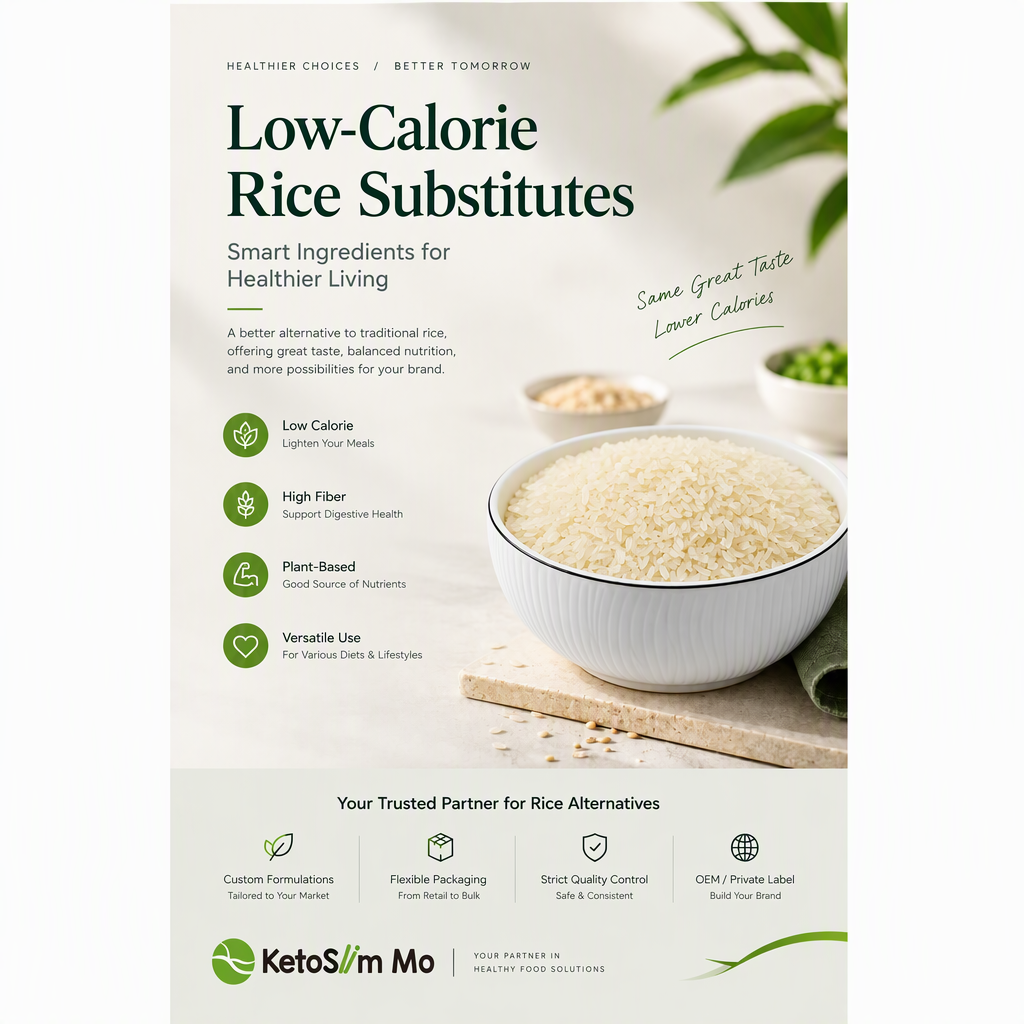
For example, konjac dry rice can be positioned as a lighter alternative to conventional rice because konjac-based formulations are typically rich in glucomannan, a soluble dietary fiber.
For commercial product development, brands should evaluate the complete nutrition panel rather than relying on one headline claim.
3. Consider Texture and Eating Experience
3. Consider Texture and Eating Experience
A product can have an excellent nutritional profile but still struggle if consumers dislike its texture.
Traditional rice has a familiar bite and structure. Therefore, rice substitutes should be evaluated for:
Grain appearance
Firmness
Chewiness
Moisture after cooking
Sauce absorption
Stability during reheating
Konjac rice, cauliflower rice, quinoa blends, and other alternatives can provide distinctly different eating experiences.
For brands, sample testing is particularly important. Conducting internal tasting before mass production can help identify whether the product matches the expectations of the target market.
4. Evaluate Preparation and Convenience
4. Evaluate Preparation and Convenience
Convenience can become an important competitive advantage.
Ask practical questions such as:
Does the product require cooking, soaking, rinsing, or reheating?
Different formats may suit different channels. For example, dry konjac rice can offer advantages in storage and transportation compared with products that contain high moisture levels.
Brands should also consider:
Preparation time
Cooking instructions
Equipment requirements
Portion size
Consumer ease of use
A product that is simple to prepare can fit naturally into meal-prep, office lunch, fitness, and everyday household scenarios.
5. Check Shelf Life and Storage Requirements
Shelf life directly affects inventory management and international distribution.
When comparing suppliers, buyers should confirm:
Product shelf life
Recommended storage conditions
Packaging barrier properties
Batch stability
Shipping requirements
Expiration-date management
For importers and distributors, a stable shelf-life profile can make inventory planning considerably easier.
This is especially relevant when developing products for overseas markets where sea freight, customs clearance, and local distribution can add considerable time to the supply chain
6. Assess Formula Customization Potential
6. Assess Formula Customization Potential
A strong rice substitute supplier should ideally offer more than one standard formula.
Brands may consider customized concepts such as:
Original konjac rice
Low-GI konjac rice
Konjac quinoa rice
Purple sweet potato konjac rice
Multigrain konjac rice
Oatmeal konjac rice
Black rice konjac blends
High-fiber formulations
High-protein formulations
Customization allows brands to create different SKUs for different consumer groups instead of competing with identical products.
For B2B buyers, this can also provide opportunities for private label product differentiation.
7. Choose the Right Packaging Format
Packaging should match the intended sales channel.
Possible formats include:
Stand-Up Pouches
Suitable for supermarkets, health food stores, and e-commerce because they offer convenient storage and strong branding space.
Retail Boxes
Useful for premium positioning, multi-pack products, and visually focused retail shelves.
Cups or Bowls
Suitable for convenience-oriented products and ready-to-prepare meal concepts.
Bulk Packaging
More appropriate for distributors, foodservice businesses, and manufacturers purchasing ingredients or larger quantities.
The packaging decision should consider not only appearance but also shipping efficiency, storage, product protection, and target retail price.
8. Look Beyond the Product: Evaluate the Supplier
Packaging should match the intended sales channel.
Possible formats include:
Stand-Up Pouches
Suitable for supermarkets, health food stores, and e-commerce because they offer convenient storage and strong branding space.
Retail Boxes
Useful for premium positioning, multi-pack products, and visually focused retail shelves.
Cups or Bowls
Suitable for convenience-oriented products and ready-to-prepare meal concepts.
Bulk Packaging
More appropriate for distributors, foodservice businesses, and manufacturers purchasing ingredients or larger quantities.
The packaging decision should consider not only appearance but also shipping efficiency, storage, product protection, and target retail price.
For brands, selecting the right product without selecting the right manufacturer can create problems later.
Before placing an order, evaluate:
Manufacturing capacity
Quality control procedures
Food safety certifications
R&D capabilities
OEM/ODM experience
Export experience
MOQ flexibility
Sampling process
Production lead time
Packaging customization
Communication efficiency
A supplier capable of supporting both small-scale product testing and future volume expansion can provide greater flexibility as the brand develops.
9. Consider Commercial Viability
9. Consider Commercial Viability
A low-calorie rice substitute also needs to make business sense.
Calculate the expected:
Product Cost + Packaging + Freight + Import Costs + Distribution Costs = Landed Cost
Then compare the landed cost with the expected wholesale and retail price.
A product with an attractive nutritional profile may not be commercially suitable if the final cost leaves insufficient room for distributors, retailers, or e-commerce platforms.
Therefore, product development should balance nutrition, quality, consumer appeal, and target cost.
10. Why Konjac Dry Rice Is an Option for Brand Development
Among different low-calorie rice substitutes, konjac dry rice offers an interesting combination of nutritional positioning and commercial flexibility.
Its dry format can support longer storage and easier international distribution, while konjac-based formulations can provide a source of soluble dietary fiber. It can also be developed into multiple product concepts, allowing brands to build a broader rice-alternative portfolio.
For example, KetoSlimMo provides konjac-based rice solutions for wholesale, OEM, and private label projects, with options for customized formulas and packaging. This model allows brands to start with a core SKU and gradually develop additional variants according to market feedback.
11. Build the Product Around the Market, Not Just the Ingredient
One common mistake in product development is selecting an ingredient first and thinking about the consumer afterward.
A stronger approach is:
Target Market → Consumer Need → Nutrition Profile → Texture → Format → Packaging → Price → Production
For example, an e-commerce brand targeting weight-conscious consumers may need a visually attractive single-serve product with simple preparation instructions. A distributor supplying supermarkets may instead prioritize competitive pricing, retail-ready packaging, shelf life, and consistent production capacity.
The same base ingredient can therefore become very different commercial products depending on the market strategy.
Conclusion
Choosing a low-calorie rice substitute requires more than comparing calorie numbers. Successful product development depends on a combination of nutrition, texture, preparation, shelf life, packaging, customization, cost, and supplier capability.
For brands entering the healthy staple market, konjac dry rice offers a flexible platform for developing low-calorie and fiber-focused rice alternatives. By defining the target consumer first and then evaluating the complete product and supply chain, brands can create a more differentiated product with stronger commercial potential.
For OEM and private label projects, the best starting point is a clear product brief covering your target market, desired nutritional profile, packaging format, MOQ, and price objective.